
Missing teeth can affect more than just your appearance. Tooth loss may impact your ability to chew, speak clearly, and maintain proper oral health. Fortunately, modern restorative dentistry offers advanced solutions such as dental implant bridges to replace multiple missing teeth with stable, natural-looking results. If you are searching for a dental implant bridge in Lynnwood, today’s implant technology can help restore both the beauty and function of your smile.
Unlike traditional removable dentures, implant-supported bridges provide a secure, comfortable, and long-lasting solution for patients missing several teeth in a row.
What Is a Dental Implant Bridge?
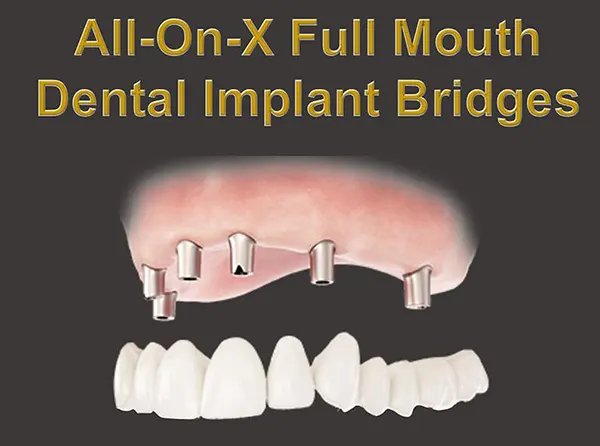
A dental implant bridge is a fixed restoration used to replace multiple missing teeth. Instead of relying on neighboring natural teeth for support, the bridge is anchored securely to dental implants placed in the jawbone.
A traditional bridge typically depends on adjacent teeth for support, while an implant bridge uses titanium implant posts to create a stronger and more stable foundation.
An implant bridge generally includes:
- Dental implants
- Connector abutments
- Custom-made bridge restoration
This treatment helps restore both function and aesthetics while preserving jawbone health.
Who Is a Candidate for an Implant Bridge?
Dental implant bridges may be ideal for patients who:
- Are missing multiple teeth in a row
- Want a fixed, non-removable solution
- Have healthy gums
- Have sufficient jawbone density
- Want to avoid removable dentures
- Desire long-term tooth replacement
Patients with bone loss may still qualify after bone grafting procedures.
Common Causes of Missing Teeth
Many patients in Lynnwood seek implant bridges because of tooth loss caused by:
- Advanced tooth decay
- Gum disease
- Dental trauma
- Failed dental work
- Tooth fractures
- Congenital missing teeth
Replacing missing teeth promptly helps prevent future oral health complications.
Benefits of Dental Implant Bridges
Natural Appearance
Implant bridges are custom-designed to match the shape, size, and color of your natural teeth.
Most people cannot tell the difference between implant restorations and natural teeth.
Improved Chewing Function
Missing teeth can make eating difficult. Implant bridges restore strong biting and chewing ability.
Jawbone Preservation
Dental implants stimulate the jawbone similarly to natural tooth roots, helping prevent bone loss after tooth extraction.
Stability and Comfort
Unlike removable dentures, implant bridges stay securely in place without slipping or shifting.
Protection for Adjacent Teeth
Traditional bridges often require grinding down healthy neighboring teeth. Implant bridges do not rely on adjacent teeth for support.
Long-Lasting Results
With proper care, implant bridges can provide many years of reliable function and aesthetics.
How Dental Implant Bridges Work
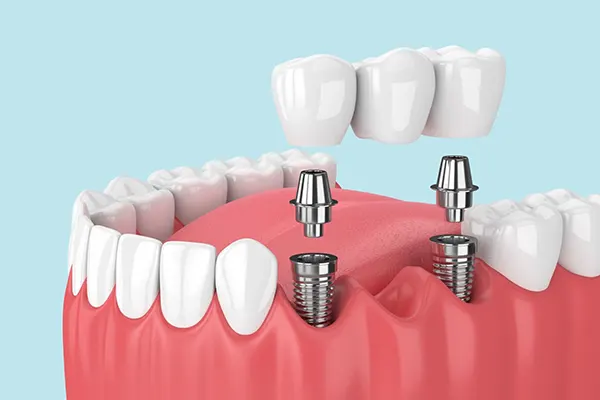
Dental implants act as artificial tooth roots placed into the jawbone.
After healing, a custom bridge is attached to the implants to replace the missing teeth.
For example:
- Two implants may support a bridge replacing three or four teeth
- Several implants can support larger restorations
This approach reduces strain on the jaw while creating excellent stability.
The Dental Implant Bridge Procedure
Initial Consultation
Your dentist evaluates your oral health, reviews digital X-rays or 3D scans, and discusses treatment goals.
Treatment Planning
A customized treatment plan is created based on:
- Number of missing teeth
- Bone density
- Bite alignment
- Smile aesthetics
Implant Placement Surgery
Titanium implant posts are surgically placed into the jawbone.
Over time, the implants fuse naturally with the bone through a process called osseointegration.
Healing Period
Healing typically takes several months as the implants integrate with the jawbone.
Temporary restorations may be used during this phase.
Placement of the Implant Bridge
Once healing is complete, the custom bridge is attached securely to the implants.
The final restoration is carefully adjusted for comfort, appearance, and bite function.
Implant Bridge vs. Traditional Dental Bridge
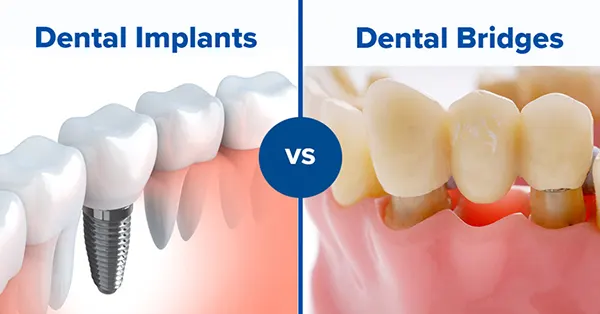
Both options replace missing teeth, but there are important differences.
Traditional Bridge
- Supported by adjacent natural teeth
- Requires enamel removal from healthy teeth
- Does not prevent bone loss
- May have shorter lifespan
Implant Bridge
- Supported by implants
- Preserves surrounding teeth
- Helps maintain jawbone density
- More stable and durable
Many patients prefer implant bridges because they offer improved long-term oral health benefits.
Implant Bridge vs. Dentures
Implant bridges are also an alternative to removable partial dentures.
Denture Challenges
- Slipping or movement
- Difficulty chewing
- Bone loss over time
- Need for adhesives
- Reduced comfort
Implant Bridge Advantages
- Fixed and stable
- More natural feel
- Better chewing efficiency
- Improved confidence
- Long-term jaw support
Bone Grafting and Implant Bridges
Some patients may require bone grafting before implant placement.
Bone grafting may be recommended if:
- Teeth have been missing for a long time
- Bone loss has occurred
- Jawbone density is insufficient for implants
Modern bone grafting procedures help create a stable foundation for successful implant treatment.
Recovery After Implant Surgery
Most patients experience mild swelling or soreness for a few days after implant placement.
Helpful recovery tips include:
- Follow post-operative instructions
- Eat soft foods initially
- Avoid smoking
- Maintain excellent oral hygiene
- Attend follow-up visits
Most patients return to normal daily activities quickly.
Caring for Your Implant Bridge
Good oral hygiene is essential for maintaining implant health.
Recommended care includes:
- Brushing twice daily
- Flossing around implants
- Regular dental cleanings
- Routine dental exams
- Avoiding tobacco products
With proper care, implant-supported restorations can remain healthy and functional for many years.
How Long Do Implant Bridges Last?
Dental implants are designed for long-term durability.
The lifespan of an implant bridge depends on:
- Oral hygiene habits
- Gum health
- Bone support
- Bite forces
- Regular dental care
Many implant restorations last decades with proper maintenance.
Why Choose Implant Bridges in Lynnwood?
Patients in Lynnwood benefit from advanced implant technology and experienced restorative dental providers.
Modern implant practices often offer:
- 3D digital imaging
- Computer-guided implant placement
- Personalized treatment planning
- Sedation dentistry options
- High-quality custom restorations
- Comprehensive restorative care
How Much Does a Dental Implant Bridge Cost?
The cost of implant bridge treatment depends on several factors:
- Number of implants required
- Size of the bridge
- Bone grafting needs
- Materials used
- Complexity of treatment
- Insurance coverage
Although implants may involve higher upfront costs, they often provide superior long-term value and durability.
Why Early Tooth Replacement Matters
Leaving missing teeth untreated can lead to:
- Jawbone deterioration
- Shifting teeth
- Bite problems
- Difficulty chewing
- Facial sagging
- Additional tooth loss
Replacing missing teeth early helps preserve oral health and facial structure.
Schedule Your Dental Implant Bridge Consultation in Lynnwood
If you are missing multiple teeth and want a stable, natural-looking solution, a dental implant bridge may be the ideal treatment. Implant-supported restorations can improve your smile, restore chewing ability, and protect your long-term oral health.
Scheduling a dental implant consultation in Lynnwood is the first step toward rebuilding your smile with strength, comfort, and confidence.